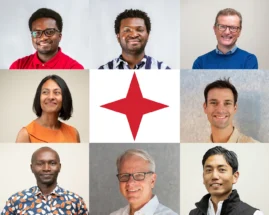
Andrew Carruthers, Co-founder & Managing Partner at Novastar:
Writing about decarbonisation poses a challenge. What more important issue is there to discuss? But what more is there to say?
Together with my Novastar colleagues, we’ve been turning this subject over in our minds. As we begin to sketch out plans for our next fund, to not address this issue feels impossible.
So, this is an attempt to share our thoughts. It’s not trying to be all-encompassing, and certain ideas will be familiar, but rehearsing them in print might help crystallise the role we can play.
“Society treats the sky as an open sewer.”
Al Gore
The world has built 200+ years’ worth of infrastructure, beginning with Britain’s Industrial Revolution and then across the globe, on a false assumption that we can dump carbon into the atmosphere for free.
Now, at a point when we all know decarbonising is no longer an option and incremental change is not enough, the only way to solve this is to start accounting for carbon as if it’s a cost, rather than an unpriced externality.
If you don’t price the true impact of the damage being done by carbon emissions you won’t get systemic change. Commercial players are not waiting for governments — 60 of the FTSE 100 companies have committed to net zero by 2050; the voluntary carbon market exceeded $1bn in 2021, that’s 211% of the value of the market in 2020. McKinsey estimates the demand for carbon credits could increase 15 fold by 2030 and 100 fold by 2050 as industries realise they can’t go net zero and have to buy credits.
The global north, having grown rich on mispriced natural assets, is the most heavily invested in the hydrocarbon legacy and needs to battle powerful vested interests to effect transition. Conversely, despite having done almost nothing to create this global problem, the continent of Africa is in a unique position to be a big part of the solution. It may feel reasonably outraged by the burden of this shift, yet a more powerful response is to grasp it as an opportunity. To see it as a chance to aggregate enormous economic and social gains for the benefit of its people and the world by decarbonising for good.
“The game will be won or lost in the developing countries.”
Bill Gates
Through pandemic, fire and storms, the fact becomes more evident that climate, biodiversity and human society are globally coupled systems. We begin to see that the only true wealth is that which we hold in common with the rest of humanity. The ecosystem that supports all of us.
If you think of natural assets being the biggest tool for decarbonising (at least until we come up with better technologies) the continent of Africa has some of the greatest of these assets anywhere in the world.
So, how do we make sure that Africa is on the winning side, acting as a catalyst for that change and benefitting from all the opportunities it will create?
First, we know Africa is capable of leapfrogging outdated technologies. It’s already shown this in bypassing fixed line telephony, and in traditional finance where customers have moved straight to mobile banking. The same is happening with telemedicine. This transformation just requires a joining of the dots between the source of the technologies on the one hand, and the most appropriate implementation of those technologies on the other.
Second, if we can innovate around agricultural practices and food production for a population that is growing exponentially, at the rate African countries are, while preserving its biodiversity, then the whole world will benefit from the nature-based engine that is embedded naturally in the African system. And while the nature of agriculture in the global north is hyper-industrialised, Africa’s agriculture is still fundamentally small scale and human powered. If you were able to democratise down to the individual small scale farmer the benefits of carbon capture using permaculture, silvopasture, intercropping etc. — all the things that have been part of indigenous practices for millennia — that would effectively power up a system of agriculture that would never be replicable in the North.
But Africa can’t play this role without social justice — you cannot ask someone who is surviving on $2 a day to do something now that is against their interests tomorrow for the sake of the world 20 years hence. We have to find clever ways to encourage behaviour change towards climate positive practices by making it financially worthwhile for everyone.
“Poverty and climate change are the same issue, just different sides of the same coin… make no mistake, we will succeed in addressing the challenges of climate only when we address the impact on people and communities in both the developing and developed world.”
David Blood
So what is the role for venture capital? Why could this be the vehicle to seize what we think will be the mother of all investment opportunities to the benefit of the continent of Africa?
Well it’s patient, and often courageous. VC thinks in 10+ year cycles. If the day trader is sitting on the seashore watching the next set of waves and trying to figure out which will be the biggest, and the private equity guy is wondering whether the tide is turning or not, the venture capitalist is trying to figure out where the gulf stream starts so they can drop their bottle in at that point.
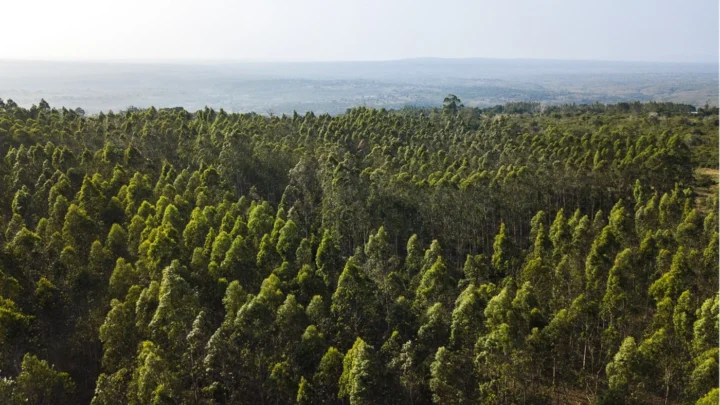
Novastar is experienced at not only finding disruptive entrepreneurs but inclusive business models too. Carbon-down assets already represent about 50 per cent of our portfolio by number. Whether it’s Komaza reforesting degraded lands; Sure Chill providing fridges in places without power; Sanergy transforming waste into nutrient rich fertilizers and animal feed; BasiGo’s fleet of electric buses; or GreenPath’s regeneratively grown organic vegetables and herbs. We know the entrepreneurs able to take this on.
With every threat there is an opportunity. This is the space where venture capital plays best. It happened in my first experience of venture capital during the internet revolution. Today, you wouldn’t dream of setting up a fund to invest in ‘the internet’ but in 1999 you could, because it was a containable thing. Our sense is that this is true for a decarbonising fund. In the end decarbonisation will have to happen everywhere but until it is as widespread as the internet, it is going to need some innovators to let the carbon genie out of the bottle (or put it back in!). That’s precisely where disrupters, entrepreneurs, people who scribble outside the lines can play. VC must be to the climate revolution what it has been to the internet revolution.
The question I am left with is: is VC bold enough to be true to its origins, to push for carbon to be priced and create the industries of the future? We believe it is.