Riki Yamauchi, Investment Director at Novastar Ventures, writes:
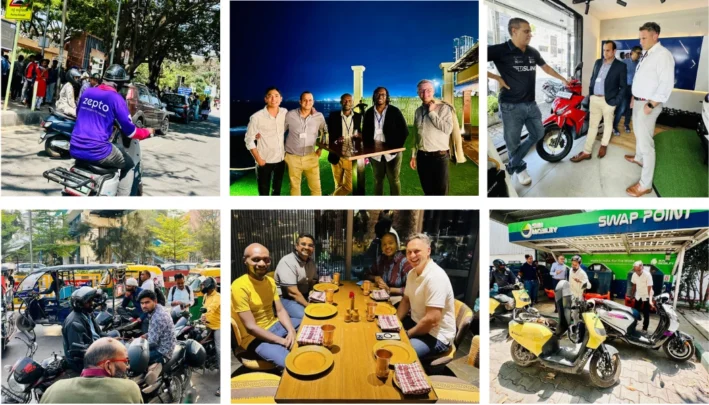
In March 2025, Andrew, Abel and I took a trip to India, home to one of the most dynamic startup ecosystems in the world. With a population of over 1.4 billion, a rapidly expanding middle class, and increasing urbanization, the country presents a vast market for innovation across multiple sectors, including electric mobility (EV) and quick commerce. Our visits to Delhi and Bengaluru were packed with insightful meetings and site visits with key players in these industries, including Uber India, Everest Fleet, Cashify, Bike Bazaar, BluBird, Prosus Ventures, MOVEing, Satvacart, Matter, 3one4 Capital, IPV, Sun Mobility, and Zypp Electric.
Key Observations from Our Trip:
Accelerating EV Transition: India’s transition to EVs is rapidly gaining momentum, particularly in the two-wheeler (E2W) and three-wheeler (E3W) space. This shift is driven by environmental imperatives and commercial benefits, especially in ride-hailing, food and grocery delivery, courier services, and e-commerce logistics.
Quick Commerce and E-Commerce Driving Electrification: Leading players such as Zomato, Zepto, Swiggy, Amazon, and BigBasket are actively promoting the adoption of electric 2Ws within their fleets.
A Gap in the Market for African EV Manufacturers: While E2Ws dominate India’s EV landscape, Indian manufacturers have yet to develop high-performance, cost-effective electric motorcycles to the same standard as their African counterparts. This presents an opportunity for African EV manufacturers such as Ampersand, Arc Ride, Gogo Electric, Spiro, and Zeno to expand their solutions to India. These bikes, built for Africa’s challenging terrain means they’re durable, powerful and reliable — which is exactly what India’s B2B delivery market needs.
Differences in Gig Worker Profiles: In India, gig workers tend to be young and temporary, viewing gig work as a stepping stone. As a result, they prefer short-term E2W rentals or lease options over ownership. In contrast, gig work in Africa is often aspirational, with most riders aiming to own their motorcycles through lease-to-own or asset financing models.
Government Support for EVs: India’s FAME I and FAME II policies have played a crucial role in accelerating EV adoption through demand and supply-side subsidies. These incentives have stimulated demand, attracted investment, and helped the market reach critical mass — offering a valuable lesson for African governments looking to drive EV adoption on the continent.
Insights from the BII Venture Capital Summit in Sri Lanka:
Following our India visit, we participated in the BII Venture Capital Summit, Innovation for Impact, in Colombo, Sri Lanka. The two-day summit brought together over 150 VCs, startup founders, LPs, and ecosystem participants from Africa, India, and Asia to discuss emerging market investment trends and solutions addressing global climate risks.
The conference featured key discussions, including “Global Investors Investing in the Global South,” “Silicon Sahara and Indus Valley in 2025,” and “EV Primer in Africa and South Asia.” These panels provided valuable insights into the similarities and differences between the startup ecosystems in Africa and India, as well as opportunities for collaboration.
Key Takeaways from the Summit:
India’s Advanced Ag-Tech Sector: India has a highly developed ag-tech sector, and many of its innovations could be applied in Africa.
E-Mobility Differences: The gig worker profile and vehicle ownership models differ significantly between India and Africa, influencing how EV adoption strategies should be tailored.
New Sources of Capital: Family offices, corporates, and endowments from regions such as Singapore, Japan, and the U.S. are showing interest in investing in strong GPs operating in both India and Africa.
Our trip reinforced the importance of cross-market learning and collaboration. As the mobility landscape evolves, Africa and India stand to gain significantly from exchanging best practices, investment strategies, and technological solutions that drive inclusive and sustainable economic growth.