Dayo Oduleye, Investment Analyst at Novastar Ventures, discusses Novastar Ventures’ Fund III investment in Chowdeck, a business that is building the future of logistics for African cities by creating a platform that benefits consumers, vendors and riders alike.
Q: What problem is Chowdeck solving and why does it matter?
A: Food and grocery delivery across African cities remains unreliable and expensive with urban consumers facing long wait times, high prices and inconsistent access to quality meals. Vendors struggle with digital tools, logistics, and customer reach, while delivery riders contend with volatile income and security risks.
In Nigeria alone, the food delivery market is projected to hit $4.8 billion by 2029. Yet poor infrastructure, traffic congestion and trust barriers have made it difficult for global players to gain traction and for local platforms to scale.
Chowdeck is solving this problem with a hyperlocal, tech-enabled model that connects neighbourhood vendors to urban consumers, offering faster, more affordable delivery while building a sustainable logistics engine.
Chowdeck addresses the inefficiencies of food delivery in African cities by tapping into growing smartphone adoption and shifting consumer expectations. As more people come online, demand for fast and dependable service is rising and convenience now defines the user experience.
But speed alone isn’t enough. Chowdeck is designing a logistics system that balances performance with sustainability, optimizing delivery routes, investing in a greener fleet, and improving rider welfare. This focus on environmental and operational resilience sets it apart in a space where many others have failed.
The team’s strength lies in its deep technical know-how, market understanding and strong execution. Chowdeck is not just building a faster delivery platform, it’s laying the foundation for an inclusive and sustainable future for last-mile delivery in Africa.
Q: What makes Chowdeck’s model stand out?
A: Chowdeck’s key innovation is its hyperlocal logistics approach. By focusing deliveries within 3–5 km zones, the platform reduces fuel and time costs, increases rider efficiency, and improves the economics for vendors, customers and the business itself.
This is paired with:
· Smart routing algorithms and real-time rider tracking
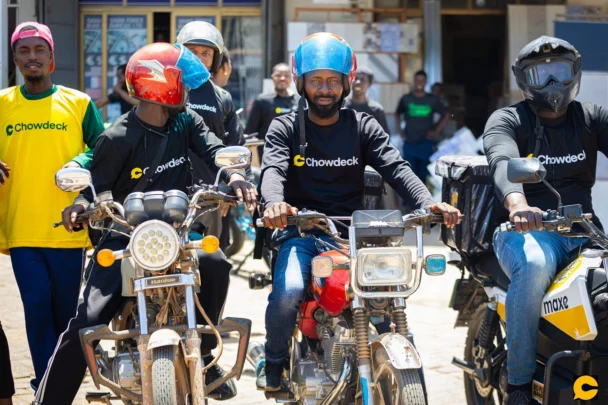
· A growing fleet of 10,000 riders (6,000 active monthly)
· A vendor network of 4,000+ businesses, of which 3,000 are active each month
· A user base of 240,000 monthly active customers across Nigeria and Ghana
Crucially, 47% of Chowdeck’s fleet is already made up of bicycles or electric two-wheelers — up from 13% just last year. The company is on track to exceed 90% by 2027, which will significantly cut carbon emissions while lowering rider and platform costs.
Q: Why did Novastar invest in Chowdeck at this stage?
A: Chowdeck is already Nigeria’s leading food delivery platform. The team has demonstrated consistent execution, strong user growth and a clear path to scale. Chowdeck has also delivered both commercial as well as social and environmental value in complex urban markets.
With this Series A investment, led by Novastar and joined by new and returning investors, Chowdeck will:
· Continue to grow its footprint in Ghana and Nigeria
· Launch new dark stores to improve inventory and delivery speed
· Accelerate user and vendor acquisition
· Strengthen its ESG practice
· Advance its proprietary logistics tech for even greater efficiency
We believe this is a pivotal moment to back a homegrown platform that is setting the pace in one of Africa’s fastest-moving sectors.
Q: How does Chowdeck align with Novastar’s mission?
A: Chowdeck delivers lasting social value to The Many, specifically, thousands of low-income delivery riders who benefit from increased income opportunities. These riders, who often face limited formal employment options, are now part of a rapidly growing logistics ecosystem that offers flexibility and higher earning potential. The social co-benefits of Chowdeck’s model, particularly for this underserved demographic, align directly with Novastar’s goal to invest in businesses that expand access to economic opportunity.
On the environmental front, Chowdeck has committed to decarbonizing its fleet by integrating electric vehicles (EVs) and bicycles into its operations. Already, nearly 50% of its fleet is composed of low or zero-emission vehicles, with a target to exceed 90% following this financing round.
Combined with route optimization technologies that reduce travel distances and fuel consumption, Chowdeck is not only improving delivery efficiency but also dramatically reducing greenhouse gas emissions. These efforts are expected to avoid an estimated 34,812 tCO₂e by 2030, scaling up to over 600,000 tCO₂e by 2036.
Chowdeck also serves as a powerful growth platform for over 4,000 vendors, ranging from restaurants and pharmacies to local markets and supermarkets, who rely on its infrastructure to reach new customers. By connecting these vendors to a wider market, Chowdeck is creating a more inclusive, tech-enabled commerce ecosystem while also improving access to affordable and convenient food and essential goods for consumers.
Q: What lessons does Chowdeck offer other entrepreneurs?
A: Chowdeck’s growth has come through evolution. From refining its technology to adjusting its fleet operations and optimizing customer service, the company has adapted to the demands of African markets. Embedding agility into operations from the start is a great lesson!
Another key to Chowdeck’s growth is its commitment to developing solutions that serve not just customers, but also riders and vendors. This multi-stakeholder approach ensures that the entire ecosystem benefits from the platform’s growth, creating stronger alignment and loyalty across the board. For entrepreneurs, the lesson is clear: building stakeholder-centric products leads to better retention, operational resilience, and long-term sustainability.