
Abel Boreto, Investment Director at Novastar Ventures, writes:
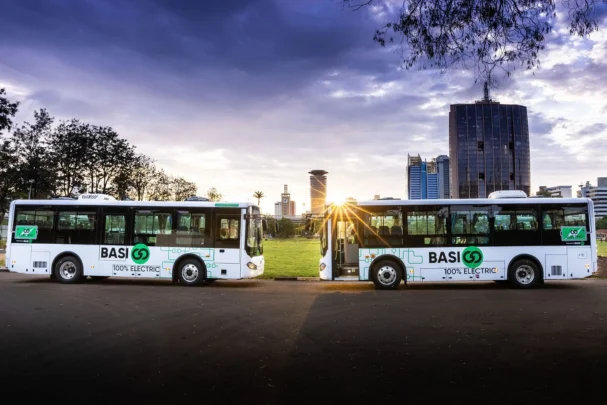
Building and scaling a startup in Africa is no easy feat, especially in the electric mobility sector. The sector presents unique challenges, including limited charging infrastructure, high upfront and setup costs, high import duties, and range anxiety among potential customers. These obstacles are further compounded by recent macroeconomic conditions on the continent, which have seen currency devaluations, high inflation, and limited access to capital. Yet, despite these hurdles, BasiGo, Africa’s largest electric bus platform, has not only survived but thrived.
In its mission to revolutionize the public bus transport sector in Africa, BasiGo has built a full-stack, end-to-end electric bus solution. This encompasses electric bus charging and service infrastructure, local electric bus assembly capabilities, and a pay-as-you-drive leasing solution.
So, what can we learn from BasiGo’s success to date? Here are four key factors that have propelled BasiGo from startup to leader:
1. Remaining agile…
BasiGo’s founders have demonstrated remarkable pragmatism, quickly adjusting their strategies based on market feedback. For example, when plans to partner with local financial institutions to partly finance bus operators in Kenya and Rwanda faltered, the BasiGo founders pivoted. They introduced an innovative Pay-As-You-Drive leasing solution, which allowed bus operators to lease electric buses affordably. They also embarked on raising the required debt and equity capital to finance the leases at scale. This adaptability reflects BasiGo’s deep understanding of the African markets and willingness to refine strategies based on real-world feedback.
BasiGo’s agility extends beyond strategic decisions. The company has tailored its approach to the unique challenges and needs of its second market, Rwanda. Whether navigating regulatory and operational hurdles, critical partnerships with local players, demand from local bus operators, or adapting to cultural differences, BasiGo has remained responsive to changing conditions. This flexibility has been instrumental in the company’s successful expansion into Rwanda.
2. Building strategic partnerships…
BasiGo’s success is also driven by its ability to forge strategic partnerships. These partnerships have provided access to essential technology, resources, insights, support and expertise that have accelerated BasiGo’s growth.
The company has partnered with several electric bus manufacturers, including BYD, CHTC, Higer, Zhongtong and Tata. These partnerships have not only mitigated risks associated with supply chain disruptions, but also allowed BasiGo to leverage each manufacturer’s unique strengths and technological capabilities and negotiate for better terms.
BasiGo has also secured local strategic partnerships to enhance operational efficiency and scalability. The company has partnered with Kenya Vehicle Manufacturers (KVM), a subsidiary of CFAO Kenya and a leading vehicle assembler in Kenya, to establish local assembly capabilities for electric buses. By collaborating with KVM, BasiGo has also tapped into the expertise and resources of CFAO, a subsidiary of Toyota Tsusho Corporation and the largest automotive distributor in Africa. This collaboration has been a game changer for BasiGo, enabling the company to navigate complex regulatory and operational hurdles , ramp up the local assembly of electric buses, significantly reduce import duties and enhance scalability and competitiveness.
Furthermore, BasiGo’s partnership with AC Group, the leading provider of tap-and-go payment systems for buses in Rwanda, has supported BasiGo’s expansion into the market. By collaborating with AC Group, BasiGo has been able to automatically deduct lease fees from bus fares, simplifying payment operations for bus owners, and obtaining valuable insights into electric bus performance and profitability.
3. Engaging stakeholders proactively…
Since its inception, BasiGo’s founders have conveyed a vision that has inspired investors, employees, customers, and the public. They have built broad-based support for BasiGo’s mission by keeping stakeholders engaged and informed on progress, challenges, and milestones. This transparent communication has sustained trust and credibility, which is crucial in a rapidly evolving industry like electric mobility.
Moreover, BasiGo has contributed to positively shaping its operating environment. The company has advocated for policies that support the accelerated adoption of electric vehicles in Kenya. For example, BasiGo’s efforts led to the Kenyan government introducing a preferential electric mobility tariff and removing excise duty and V.A.T. on electric vehicles in 2023. These policy changes have been instrumental in reducing the cost of electric buses and encouraging wider adoption.
4. Overcoming funding challenges…
BasiGo’s recent success in closing an oversubscribed $24 million Series A equity funding round is a testament to its ability to attract significant investor support. The round was led by Africa50 and included participation from leading equity investors such as SBI Investment, Moxxie Ventures, Trucks.VC, Susquehanna Foundation, CFAO Kenya and Mobility54, the CVC arm of CFAO Group. The equity unlocks $23 million in debt capital from the U.S. Development Finance Corporation (DFC), Deutsche Investitions- und Entwicklungsgesellschaft (DEG) Upscaling Program and British International Investment (BII), which BasiGo worked to raise concurrently with Series A.
By communicating transparently with existing and prospective investors, BasiGo has built strong relationships that have been critical in securing funding. This relationship-building has been especially important in a challenging fundraising environment, where access to capital is limited.
In sum…
BasiGo’s remarkable growth can be attributed to several key factors: its ability to adapt quickly, its strategic partnerships across the value chain, its proactive engagement with stakeholders, and its success in overcoming funding challenges. These factors have enabled BasiGo to not only survive but thrive in Africa’s challenging electric mobility sector. Onwards to the next chapter!